
Laboratory:Akiruno
0 results
Selected search options |

Laboratory:Akiruno
CODE:☆(旧 ☆)


A method that uses a next-generation sequencer to simultaneously determine the base sequences of a huge number of DNA fragments.


Please obtain an account ID for the ordering system「NEOPOLALIS」prior to submit a request for this test item
In this test, sequencing is performed using a next-generation sequencer. Variants located in the UTR and intron regions are excluded in the detection targets. This test does not exclude the possibility of variants that are difficult to detect.
Please avoid cryopreservation of the specimen. Please avoid duplicate requests with other items. This testing method can be affected by contamination, so please handle the specimen carefully during collection.
Subject to ethical guidelines (See below)
-About genetic test(genetic test related to designated intractable diseases)〔NGS〕
・This test can only be requested from medical institutions that have submitted a notification of the standards set forth in Note 2 of Genetic Test (D006-4) to the Directors General of the Regional Bureaus of Health and Welfare, etc.
・This test reports variant information in the representative disease-causing genes of the requested disease and provides annotation information from ClinVar as reference. In addition, FASTQ files will be provided.
・For exon regions which codes proteins of the target genes, differences between the patient’s sequence and the human genome reference sequence (GRCh38/hg38) will be extracted, and based on the registration information in the gnomAD database, variants that are not registered in the database or have a minor allele frequency of less than 1% (SNVs, short indels) will be reported.
・Mosaic variants and variants in regions where probe enrichment is difficult and where the redundancy of reads excluding duplicates is less than 10 are not included in the report.
・Annotation information from the ClinVar database is based on the data available at the time the test is performed, and the database version will be indicated in the report.
Collect blood in the container shown below, mix thoroughly, and store in the refrigerator.
Please submit the specimen on the same day it is collected.
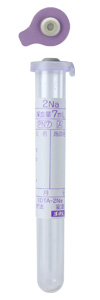
EDTA-2Na入り (真空採血量7mL)
内容:EDTA-2Na 10.5mg
貯蔵方法:室温
有効期間:製造から2年
ご依頼いただいた疾患の代表的な疾患原因遺伝子にあるバリアント情報と
ClinVarによるアノテーション情報をご報告いたします。
加えて、FASTQファイルを報告いたします。
| 筋力低下群 | 先天性筋無力症候群、縁取り空胞を伴う遠位型ミオパチー、ベスレムミオパチー ※1、 過剰自己貪食を伴うX連鎖性ミオパチー、先天性ミオパチー ※1、 デュシェンヌ型筋ジストロフィー、ベッカー型筋ジストロフィー、筋強直性ジストロフィー、 非ジストロフィー性ミオトニー症候群 |
| 成長障害・知的障害・特徴的な顔貌群 | ルビンシュタイン・テイビ症候群、CFC症候群、コステロ症候群、チャージ症候群、 ウィーバー症候群、コフィン・ローリー症候群、モワット・ウィルソン症候群、 ATR-X症候群、コフィン・シリス症候群、ロスムンド・トムソン症候群、歌舞伎症候群、 ソトス症候群、ヌーナン症候群、ヤング・シンプソン症候群、スミス・マギニス症候群、先天異常症候群 |
| 知的障害・てんかん群 | ドラベ症候群、PCDH19関連症候群、先天性グリコシルホスファチジルイノシトール欠損症、 脳クレアチン欠乏症候群、グルコーストランスポーター1欠損症 |
| 心筋症群 | ライソゾーム病 ※1 (ムコ多糖症Ⅰ型、ムコ多糖症Ⅱ型、ゴーシェ病、 ファブリー病およびポンペ病を含む。)、肥大型心筋症※1 |
| タンパク尿群 | 非典型溶血性尿毒症症候群、アルポート症候群、ネイルパテラ症候群 (爪膝蓋症候群) / LMX1B関連腎症 |
| 発熱・炎症・皮疹・骨関節障害群 | クリオピリン関連周期熱症候群、TNF受容体関連周期性症候群、ブラウ症候群、 家族性地中海熱、高IgD症候群、中條-西村症候群、 化膿性無菌性関節炎・壊疽性膿皮症・アクネ症候群、遺伝性自己炎症疾患 |
※1: 一部の領域について、既知の難読領域がございます。 詳細は、下記リンク先の補足資料をご確認ください。
